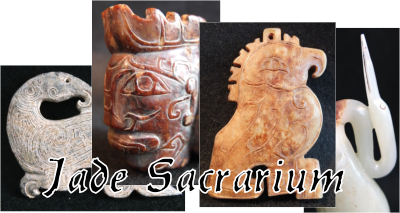
Archaic, Archaistic, Anachronistic: What's the difference? Archaic jade are truly old pieces created during the Han dynasty or earlier. There's considerable latitude for when the 'archaic' era ends, but the crucial point is that the piece was created several millenia ago. Archaistic jade are pieces created in one era in the style of an earlier one. Often not copies, but similar to older pieces. Sometimes the similarity to the original style is a bit tenuous or fanciful; these are pieces created for connoisseurs (ie. scholars and bureaucrats) who admired Chinese antiquity and longed to have something 'in the style'. They may, or may not, have been passed off as genuine antiques when they were made. Now these 'archaistic jades' are quite old themselves and are prized for their workmanship and beauty. Anachronistic jade would be pieces attributed to a chronologically impossible era or with inconsistent elements of style. For example, attributing a Quanyin statue to the Shang or Western Zhou era - the life of the Buddha transpired after those periods. Fake jade - my term for modern, deliberate forgeries intended to deceive. May not even be real jade material. What to do? I have found the Handbook for Chinese Archaic Jade: evaluation and appareciation, Chan, Agnes S., 2010, Chanwuyi Publishing House, to be very helpful. It is full of practical ideas for assessing old jade, and is informed by a deep love for the old pieces. Don't let the decision-logic charts put you off; maybe you don't formally think this way, but the material is too good to throw away just because of the presentation. |
Home > Fakes, Mistakes & Inventions >